
“I’m invisible. They don’t see me; it’s like I don’t exist…except when something wrong happens.”
That was shared with me by a Black student in one of my elementary school sessions. On another occasion, a high school student shared being repeatedly mistaken for someone else by their teacher. “The teacher keeps confusing us in the class: there are only two of us [Black students] in their class.” These reflections highlight a common experience for many Black children and educators in our schools; a reality of being both overlooked in moments that call for recognition, validation, and opportunity while also being hyper-visible or singled out for perceived wrongdoing. It also highlights the systemic biases operating in our schools.
As Catholic teachers, we are called to reflect on the way anti-Black racism and misogynoir manifest in our schools, and what we can do to create spaces of belonging, joy, and healing – where Black children, educators, and families can feel safe, valued, and dignified. We should see statements like these as a call to action to address these systemic issues. It is not optional; it is our moral, professional, and legal obligation. As Karen Murray, Toronto District School Board system superintendent of equity, says, “These issues persist not because we don’t know better, but because we choose not to act.”
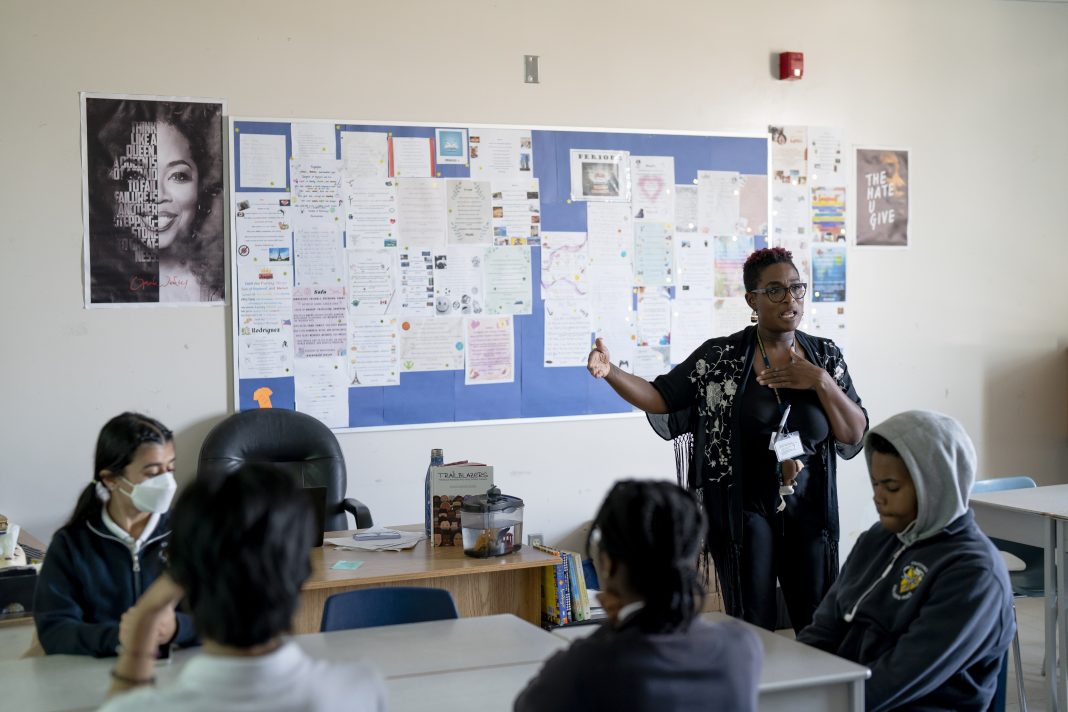
As a Black cisgender woman working as an equity consultant at a Catholic school board, I usually introduce myself with an emphasis on shared interests or languages spoken rather than my racial identity, because I have never liked labels. Yet, I find that the way people see me, their perception of my Blackness, gender, and even professional role, often overshadow my individuality, in both subtle and overt ways. These perceptions tend to influence my interactions with others. I have witnessed how this reality has impacted Black children, families, and colleagues in various and often harmful ways. Fortunately, in my role, I have also had the privilege to help students and educators better understand the impact of anti-Black racism and misogynoir – beyond retiring the use of the N-word or racial slurs.
Systemic challenges in education
Anti-Black racism is not limited to an individual act of prejudice; it is deeply embedded in policies, practices and attitudes that perpetuate inequities. Dr. Carl James reminds us that, “anti-Black racism is systemic, not individual.” In schools, anti-Black racism can manifest itself overtly in acts such as racial slurs, or in more insidious ways, such as microaggressions that marginalize Black voices and trivialize Black experiences.
The term “anti-Black racism” was first expressed in 1992 by Dr. Akua Benjamin, a Ryerson University social work professor. Benjamin sought to highlight the unique nature of systemic racism on Black Canadians and the history of slavery and colonization of people of Black and African descent in Canada. (Black Health Alliance)
Other examples of anti-Black racism in the classroom include the over-policing of Black students, a lack of (positive, affirming) representation in curricula and teaching materials, the mispronunciation of Black students’ names, stereotypical assumptions about academic capability, and resistance to programs designed for Black students (often perceived as “reverse racism” or segregation).
Misogynoir is a specific form of bias at the intersection of racism and sexism that ampli.es the challenges faced by Black women and girls. Its beginnings can be traced back to the time of chattel slavery, during which harmful stereotypes of Black femininity originated. In addition to perpetuating these damaging stereotypes, this bias tends to devalue Black women’s contributions, frequently placing them in nurturing or subordinate roles while denying them academic and leadership opportunities, or weaponizing their assertiveness and advocacy as aggression.
In my conversations with numerous Black women in leadership roles across school boards and the education system, many share experiences of invalidation, tone, and language policing, stereotyping, idea theft, dismissal of lived experiences, undermining of efforts and initiatives, micromanagement, harsher discipline, unrealistic expectations, limited advancement opportunities, lack of mentorship or support, and exclusion. Many also share the impact of colourism (sometimes referred to as shadeism), usually at the hands of non-Black colleagues or supervisors, and occasionally, by fellow Black individuals.
Adultification bias: Consider this scenario: an educator labeling a seven-year-old Black girl, who happens to be taller and bigger than her non-Black peers, as “aggressive” and “threatening.” “She is so big compared to the other kids that even I feel threatened when she stands in my way,” says the teacher. This sheds light on yet another form of bias, where Black children are viewed as older and less innocent than their peers. Adultification bias was studied by Canadian researchers Stella Igweamaka and Nana Appah, who found that Black girls as young as five are often seen as needing less protection, leading to harsher disciplinary measures compared to their non-Black peers, thus robbing them of their childhood. Black boys are also victims of this bias. They are often expected to display levels of maturity and resilience beyond their years, eroding their sense of safety and belonging in school environments.
Legal and ethical obligations: In Ontario, the Ontario Human Rights Code and Education Act, clearly outline a school’s mandate to foster environments free from discrimination and harassment. The Criminal Code also holds educators legally responsible for preventing harm to students under their care, which includes addressing acts of racism, microaggressions, and other forms of discrimination. Catholic social teachings call us to uphold the dignity of every person and prioritize the needs of the marginalized. Thus, it is our duty as Catholic teachers to intentionally and actively address anti-Black racism, misogynoir, and the adultification bias impacting Black children. Silence is complicity – it harms our students. Let us also remember that addressing the needs of Black students, families, and staff does not negate the needs of other equity-deserving groups, nor take anything away from them. As Catholic teachers, we must avoid perpetuating lateral (horizontal) violence. Equity is not a competition between Indigenous and equity-deserving groups, it is about giving everyone what they need to succeed.
Paulo Freire popularized the term “horizontal violence,” which can occur between oppressed peoples because of their oppression in the class hierarchy. Horizontal violence may be considered an effect of adversity or personal and/or group historical trauma.
Call to action for educators — actionable steps
Ask yourself: Are you maintaining the status quo or challenging it? Are you erecting new barriers or removing existing ones?
Self-reflection: Take the time to reflet on your own biases, privileges, and power, with considerations of how they may influence your interactions with students and colleagues. Participate in professional development and ongoing anti-racism training to recognize, address, and dismantle biases, anti-Black racism, and other forms of oppression. Learn how they impact Black individuals and those who appear Black. Learn how to use restorative justice approaches to navigate disciplinary issues involving Black students to prioritize understanding, accountability, and healing.
Community agreements: In my practice and experience, I have found co-created community agreements – shared norms that prioritize respect, accountability, and belonging – to be a powerful tool to combat biases, address inequities, and hold space for conversations on sensitive topics, such as race and racism. In the classrooms where educators and administrators work with students to craft community agreements, the shift in school culture is evident. The process allows all students to identify their needs and work collaboratively to draft a plan to meet them. “…While reading each other’s needs as learners, the students realized that our class was neither safe nor inclusive,” an elementary teacher shared, “…they took the activity seriously and really worked together in making those statements.”
These agreements are not just about rules, they are about fostering meaningful relationships. As Marcia Lynch, a retired teacher with the Ottawa Catholic School Board, emphasizes, “It’s about listening to others’ stories and understanding the impact of the language and actions we use every day.” Her reflections are a great reminder that inclusive practices begin with empathy and accountability. Through these co-created community agreements, educators and students can work together in creating environments where all students, including Black students, feel seen, valued, acknowledged, and safe.
Centering joy: Dr. Andrew B. Campbell, social justice teacher and assistant professor at the University of Toronto, reminds us, “The education of Black children is not just about correcting inequities, but amplifying their joy, brilliance, and potential.” Fostering identity-affirming environments where Black students can see themselves represented positively and be unapologetically themselves is a proven way to actively celebrate Black identities, and allows Black students to thrive.
Explore and apply teaching frameworks like Dr. Gholdy Muhammad’s Unearthing Joy, and adopt Afrocentric pedagogies to counter the erasure of Black contributions in the curricula. Centering joy is a form of resistance and healing.
Affirm, amplify, and listen to Black voices: Representation does matter, but it is more powerful when it is authentic and affirming. Integrate Black voices, histories, achievements in every aspect of education. Center Black voices in decision-making processes and actively invite Black educators, families, and students to lead discussions that impact them. Listen to Black voices by providing opportunities for Black individuals (students, families, staff) to share their experiences, support Black student affinity groups, associations, forums, and encourage student-led initiatives.
Support Black leadership by providing mentorship, resources, and equitable, inclusive opportunities for Black staff to thrive with dignity and joy. Remember that children are always watching. They see how you treat Black individuals (their parents, your colleagues, the school’s guests and staff) in your community. Model inclusive behaviours and language.
BE THE CHANGE
The Haitian motto l’union fait la force (unity is strength), serves as a powerful reminder that change cannot happen alone. Black children, families, colleagues, and communities need you and I to work with them. Let us team up to honour the dignity of every individual, now. Be part of the solution, not the problem. Together, united, we are stronger.